



You Didn’t Just Fund Our Education: You Gave Us a Future
You Didn’t Just Fund Our Education: You Gave Us a Future
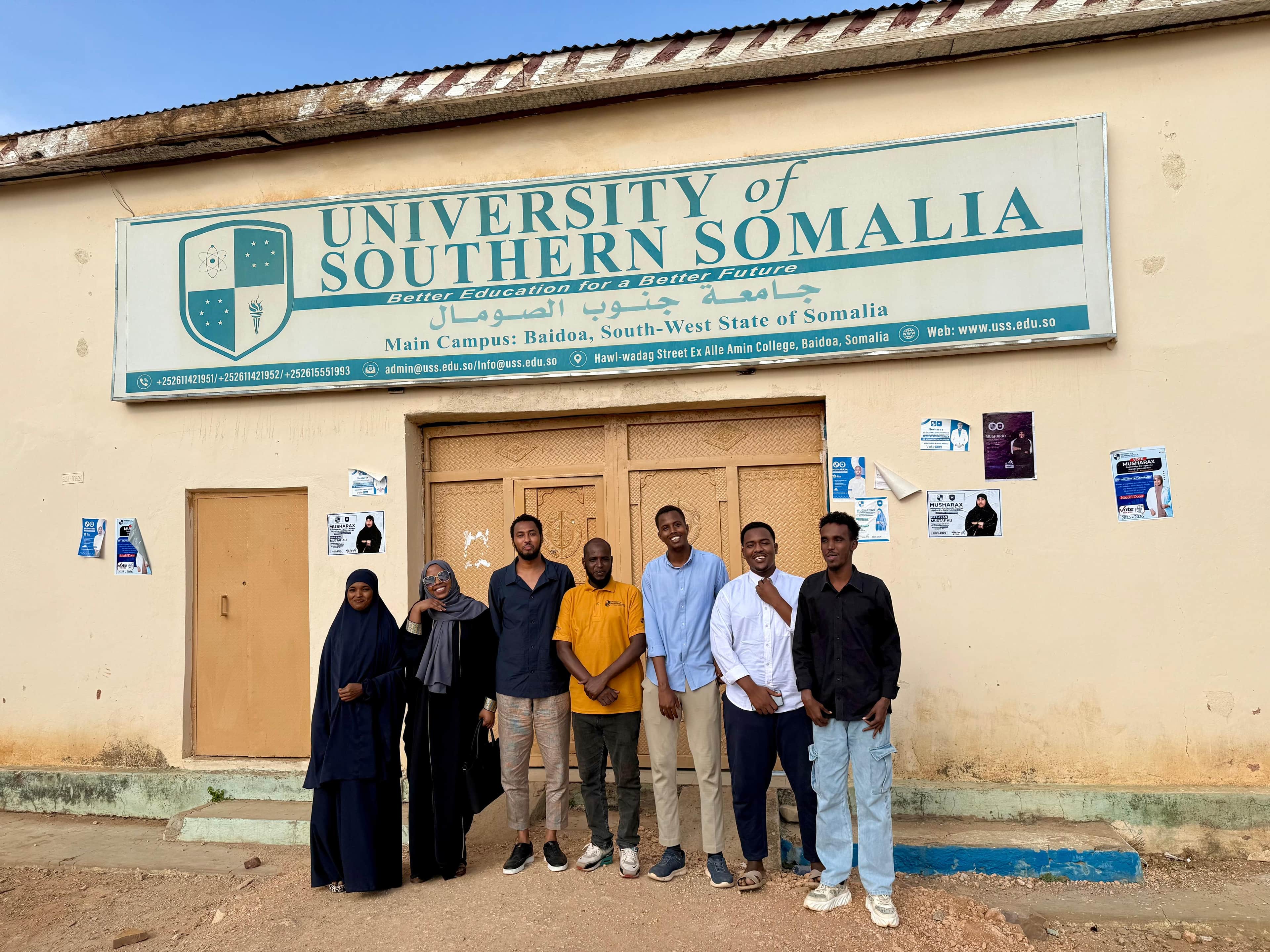
As part of our continued commitment to educational equity and social inclusion, ATM’s Deputy Director Abdirashid Fidow and Trustee Dr. Idil Hassan recently travelled to Baidoa, Somalia, to meet with the inaugural cohort of students benefiting from the ATM Fellowship. What we encountered was more than a passion for learning - it was a fierce and urgent desire for dignity, recognition, and opportunity among young people too often left behind.
Baidoa, the interim capital of the federal Southwest State, is a key strategic hub in central Somalia, located at the heart of what is typically the country’s breadbasket. It draws students from some of Somalia’s most rural and underserved communities. These young people confront structural barriers that have little to do with talent and everything to do with clan identity, geographic isolation, and generational inequality.
Among those we met was Fahma, a final-year midwifery student, who has persevered through extraordinary challenges to reach the final stage of her studies. Alongside her was Farhan, in his final year of public health, who explained with quiet conviction:
“A job is very important to me. It’s not just about income, it’s about standing on your own feet, being respected, and helping others.”
For students like Fahma and Farhan, education is a lifeline but one that remains fragile without sustained support.
Despite their determination, many students are still locked out of opportunities due to systemic inequality. Abdinasir Hussein Mohamed, an eighth-semester student of public administration, and Abdullahi Ibrahim, studying clinical medicine, have both gained experience through volunteer placements with the Ministry of Education and local hospitals yet still struggle to secure long-term prospects.
In an encouraging turn, two students from ATM Fellowship were previously selected for the Minority Rights Group International (MRG) Scholarship Programme, funded by the U.S. Embassy in Mogadishu through USAID. The scholarships were intended to support study opportunities in the UK, and the students passed their entrance exams with distinction. But just as they were preparing to travel, the programme was cancelled due to policy changes under the Trump administration cutting off a rare and hard-earned opportunity just before it began.
“They studied hard. They passed every exam. They were finally being seen for their potential. But just as their journey was about to begin, the door closed on them.” Mahamud Abdullah, Head of Academic and Student Affairs at the University of Southern Somalia (USS)
Even when access to higher education is achieved, the next hurdle is often just as daunting: employment. For many graduates from marginalised backgrounds, the lack of connections, career mentoring, or job placement services means their qualifications do not easily translate into meaningful work.
This is why the ATM Fellowship is more than just financial support, it is a structured pathway that connects education to employment. It provides mentorship, peer learning, and personal development, helping students navigate a system that was not built with them in mind.
In partnership with the University of Southern Somalia, the ATM Fellowship pilot supports five students from marginalised clans, with 50% of slots reserved for women. Though one student had to drop out due to personal circumstances, the remaining four continue to thrive with the support of the programme.
“In Baidoa, I saw something powerful, talented young people who have carried the weight of exclusion for far too long, but who have never stopped striving. This Fellowship is about more than education. It’s about saying to them: you belong, your future matters, and we’re building that future together.” — Dr. Idil Hassan, Member of the Board of Trustees, ATM
What We Saw in Baidoa Is Just the Beginning
The Baidoa visit marks the beginning of what we hope will become a national movement. The ATM Fellowship is not only about helping individuals, but also about challenging systems of exclusion and rewriting the rules of access for the next generation of Somali youth.
With the continued support of donors, partners, and communities, we aim to expand the programme to other regions and build a future where every young Somali, no matter their background, can learn, grow, and lead.
As we concluded our visit, one student’s words summed up the heart of everything we’re trying to do:
“This scholarship changed my life. For the first time, I felt seen, not as a number, not as someone from a forgotten community, but as a student with a future. To those who believed in us and supported this programme: you didn’t just fund our education, you gave us hope, dignity, and the courage to dream.” — Farhan, Final-Year Public Health Student, Baidoa
SHARE THIS ARTICLE